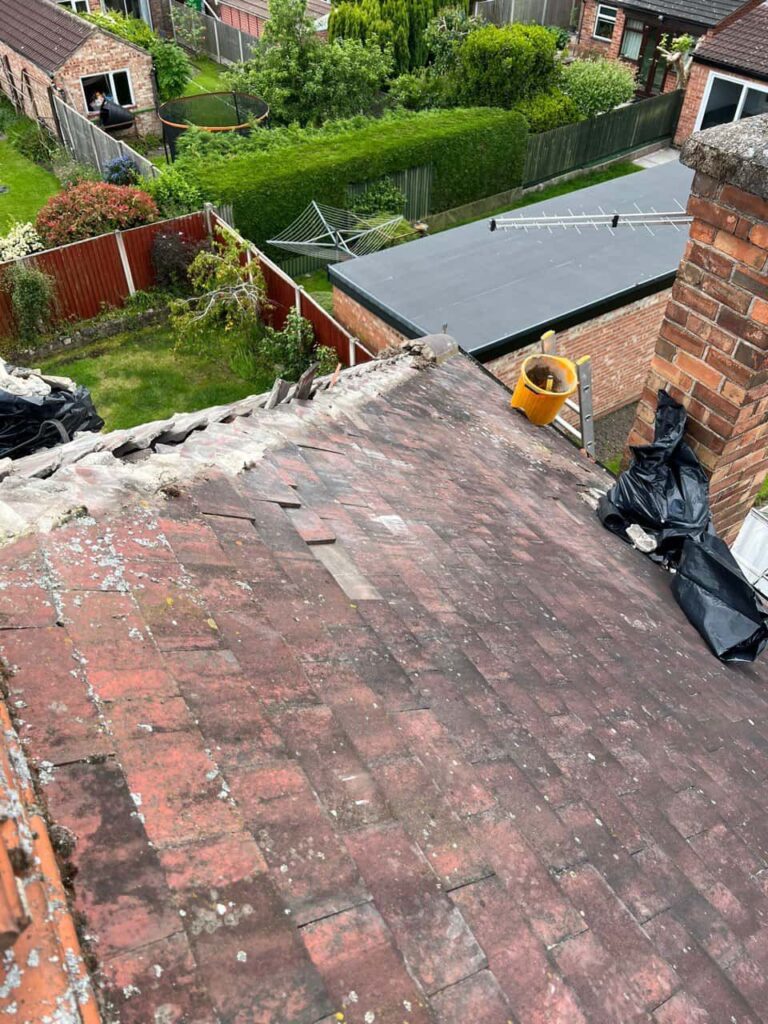
Roofing felt plays an important role in protecting a property from water ingress. Installed beneath roof tiles or other coverings, it provides an additional layer of defence against wind-driven rain, helping prevent moisture from reaching the roof timbers and interior of the building. However, roofing felt can deteriorate over time, particularly when exposed to persistent moisture, temperature changes or damage caused by other roofing defects.
For homeowners in Stoneygate, Leicestershire, recognising the early warning signs of worn or damaged roofing felt can help prevent leaks and avoid further deterioration. Although the felt itself is not always visible from outside the property, several signs may indicate that it is no longer providing effective protection.
Warning Signs of Damaged Roofing Felt
Damp Patches in the Loft
One of the clearest signs of a potential roofing problem is dampness within the loft. Water stains on rafters, discoloured timber, damp insulation or a musty smell may indicate that moisture is entering through the roof.
Damaged roofing felt can allow wind-driven rain to reach the underlying roof structure, especially if the outer roof covering has gaps or defects. However, similar symptoms can also result from broken tiles, defective flashing or condensation.
A professional inspection can help identify the source of the moisture and establish whether the felt needs repairing or replacing.
Torn, Cracked or Brittle Felt
Roofing felt can become brittle as it ages, making it more susceptible to cracking and tearing. Movement within the roof structure, previous repair work and prolonged exposure to moisture can also contribute to deterioration.
Where felt is visible from a safely accessible loft space, look for splits, holes, sagging sections or material that appears damaged around roof timbers. These defects may reduce the felt’s ability to direct moisture towards the eaves and away from vulnerable parts of the roof.
The extent of the damage determines the appropriate solution. Localised defects may be repairable, while widespread deterioration can indicate that a larger section of the felt needs replacing.
Sagging or Loose Sections
Roofing felt should provide consistent coverage beneath the roof covering. If sections become loose, sag or pull away from their original position, water may not drain as intended.
Sagging can develop when the material deteriorates, fixings fail or moisture affects the surrounding components. It may also be associated with damaged battens or other underlying roofing issues.
Rather than attempting to pull the felt back into place, arrange an inspection to establish why it has moved and whether the surrounding roof structure remains sound.
Water Staining Around the Eaves
The eaves are the lower edges of a pitched roof, where rainwater should drain towards the guttering. Roofing felt is designed to help guide moisture towards this area, reducing the risk of water reaching the roof timbers.
If the felt has deteriorated or no longer extends correctly towards the eaves, water may collect in vulnerable areas. Signs to watch for include damp timber, staining near the roof edge and evidence of moisture behind the fascia.
These symptoms can also be linked to blocked gutters or damaged roof coverings. A thorough assessment can help distinguish between drainage problems and defects affecting the roofing felt.
Repeated Roof Leaks Despite Tile Repairs
If a roof continues to leak after damaged tiles have been replaced, the underlying protective layers may need closer examination. Roofing felt can develop tears or gaps that remain hidden beneath the outer covering, allowing water to enter even when the visible tiles appear to be in reasonable condition.
Repeated leaks in the same area may indicate that an earlier repair has not addressed the full cause of the problem. Checking the felt, battens, flashing and surrounding roof components can help establish whether additional work is necessary.
Identifying the underlying defect is essential to achieving a lasting repair rather than repeatedly treating the visible symptoms.
What Causes Roofing Felt to Deteriorate?
Roofing felt is subject to gradual wear throughout its service life. Ageing can reduce its flexibility and make the material more vulnerable to splitting. Persistent moisture, poor ventilation, movement within the roof and damage during previous maintenance work may also contribute to its decline.
Stormy weather can expose existing weaknesses by driving rain beneath loose or damaged roof coverings. Once moisture reaches the underlying structure, it may affect timber, insulation and internal finishes if the problem remains unresolved.
Routine roof inspections can help identify deterioration before it leads to more noticeable damage. Where access to the felt is restricted, a roofing professional can assess the roof safely and determine whether further investigation is needed.
Repairing or Replacing Damaged Roofing Felt
The most suitable repair depends on the age of the felt, the location of the damage and the condition of the surrounding roof materials. Small, accessible defects may sometimes be repaired, but extensive cracking, widespread tearing or repeated water ingress may require replacement across a larger section.
Roof tiles or other coverings may need to be carefully lifted to access the damaged felt. During this work, the condition of the battens and roof timbers should also be checked for signs of deterioration.
Stoneygate Roofing Repairs can assess roofing concerns in Stoneygate, Leicestershire, and help determine whether damaged felt requires repair or replacement. Addressing the underlying cause of moisture ingress is important for restoring the roof’s protective function and reducing the risk of recurring leaks.
Conclusion
Worn or damaged roofing felt can compromise a roof’s ability to keep moisture away from the underlying structure. Damp loft spaces, torn material, sagging sections, staining near the eaves and recurring leaks are all potential warning signs that should not be ignored.
Recognising these symptoms early can help prevent more extensive damage and ensure that the correct repairs are carried out. If you suspect your roofing felt is deteriorating, contact Stoneygate Roofing Repairs to arrange an assessment and discuss the most appropriate solution for your property in Stoneygate, Leicestershire.
Call us on: 0116 216 4793
Click here to find out more about Stoneygate Roofing Repairs
Click here to complete our contact form and see how we can help with your roofing needs.